■ 文構造チェック
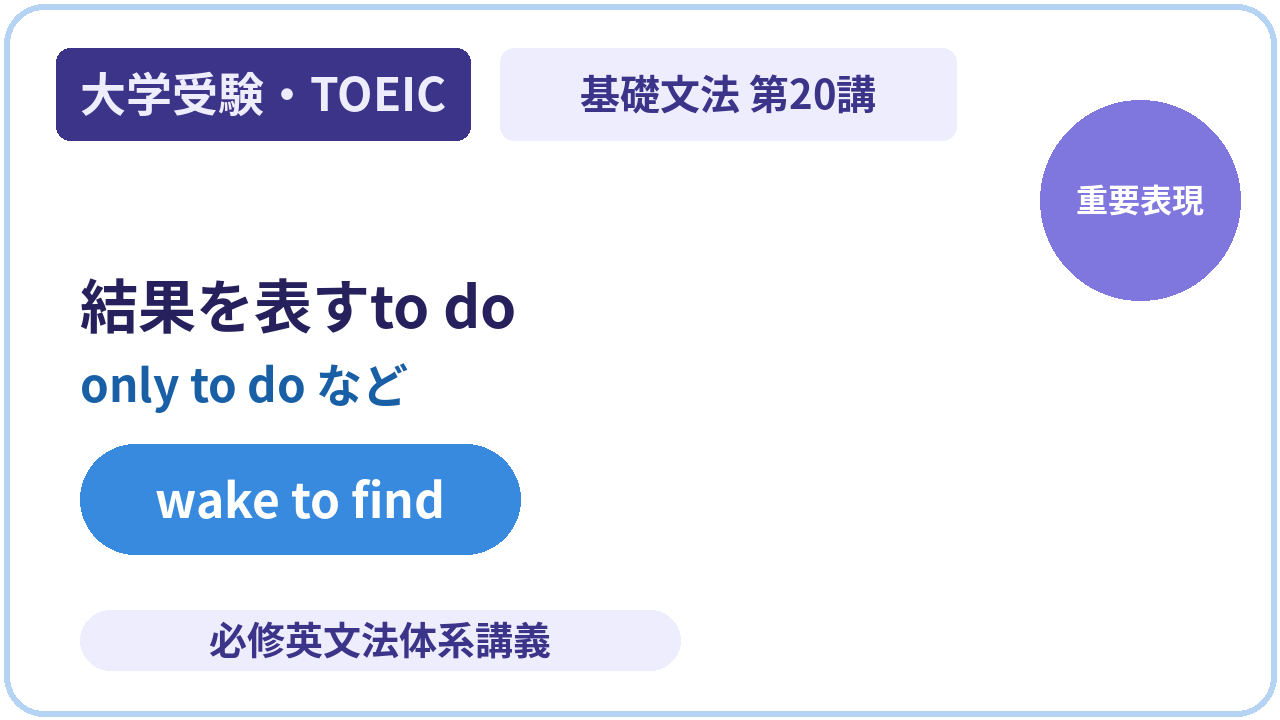
不定詞の副詞用法のうち「結果」を表す表現は形が決まっているものが多いので、そのままセットで覚える。
① wake (up) to find[see/discover] …「目が覚めて…に気づく」
He woke up to find himself in a hospital bed.
[S: He] [V: woke up] ← to find himself in a hospital bed(目覚めたという行為の結果、何がわかったか)
② grow up to be …「成長して…になる」
She grew up to be a pianist.
[S: She] [V: grew up] ← to be a pianist
③ live to be … (years old)「…歳まで生きる」
He lived to be ninety.
[S: He] [V: lived] ← to be ninety(生きた結果、何歳になったか)
④ 〜, only to do「〜したが、(結局)…した」(意外・失望)
He hurried to the airport, only to miss the flight.
[S: He] [V: hurried] [to the airport], ← only to miss the flight(急いだのに、結局〜という意外な結果)
■ 確認問題(5問)
- Ryo woke up ( ) that he had missed his flight.
(A) find (B) finding (C) to find (D) found - The little boy who loved drawing grew up ( ) a famous illustrator.
(A) being (B) to be (C) be (D) been - Her grandfather lived ( ) ninety-eight years old.
(A) being (B) be (C) to be (D) as - He rushed to the station, only ( ) that the train had already left.
(A) find (B) finding (C) to find (D) found - They searched the whole building, only ( ) nothing unusual.
(A) discovering (B) to discover (C) discover (D) discovered
■ 解答と詳しい解説
- 正解: (C) to find
文構造: [S: Ryo] [V: woke up] ← to find that he had missed his flight
解説: wake up to find「目覚めて〜に気づく」の定型表現。目覚めるという行為のあとに判明した事実をto find以下で説明している。「リョウは目が覚めて、飛行機に乗り遅れたことに気づいた」。 - 正解: (B) to be
文構造: [S: The little boy who loved drawing] [V: grew up] ← to be a famous illustrator
解説: grow up to be「成長して〜になる」の定型表現。子ども時代の様子(絵を描くのが好きだった)から成長した結果を表している。「絵を描くのが好きだったその少年は、成長して有名なイラストレーターになった」。 - 正解: (C) to be
文構造: [S: Her grandfather] [V: lived] ← to be ninety-eight years old
解説: live to be〜(years old)「〜歳まで生きる」の定型表現。生きた結果到達した年齢を示す。「彼女の祖父は98歳まで生きた」。 - 正解: (C) to find
文構造: [S: He] [V: rushed] [to the station], ← only to find that the train had already left
解説: 〜, only to do「〜したが結局…した」という、努力が報われなかった意外・失望の結果を表す表現。カンマの前後で「急いだ」という行動と「電車はもう出ていた」という予想外の結果が対比されている。「彼は駅に急いだが、結局電車はすでに出発していた」。 - 正解: (B) to discover
文構造: [S: They] [V: searched] [the whole building], ← only to discover nothing unusual
解説: 同じく only to do の形。「建物全体を探したのに、結局何も見つからなかった」という徒労感・失望を表している。他の選択肢は動詞の原形や現在分詞のままではカンマ以下の副詞句として機能しない。

コメント